

The Terai
The plains of southern Nepal are known as the Terai. This is a continuation of the north Indian plains. It always comes as a revelation, when crossing a land border, that there is little difference between the people on either side of that imaginary line known as ‘the border’. Maps showing nations and their borders are known as political maps. Governments change, laws change, the uniforms of the police are different, but of course the people are similar, because they are neighbours. They evolved and grew side by side. They share the same weather, animals and ancestry. Their water and languages come from the same sources. Vegetation is consistent across borders, happily unaware of political considerations.
Borders were not a feature of ancient geography, they were the badlands, the gaps on the map, difficult terrain. They came into being as the city states expanded to control all the land between themselves and neighbouring cities. A line was drawn in the sand, or on a map, and that was declared to be a border with an abrupt transition from one set of laws to another. Individuals were not the concern of these arrangements. Human happiness was not a consideration. If families and communities were divided by these artificial constraints, they suffered.
Nepal, like other small countries, suffers from its proximity to powerful nations. Wealth seems to generate greed rather than generosity, and only a pittance gets back to those struggling with large families and low incomes.
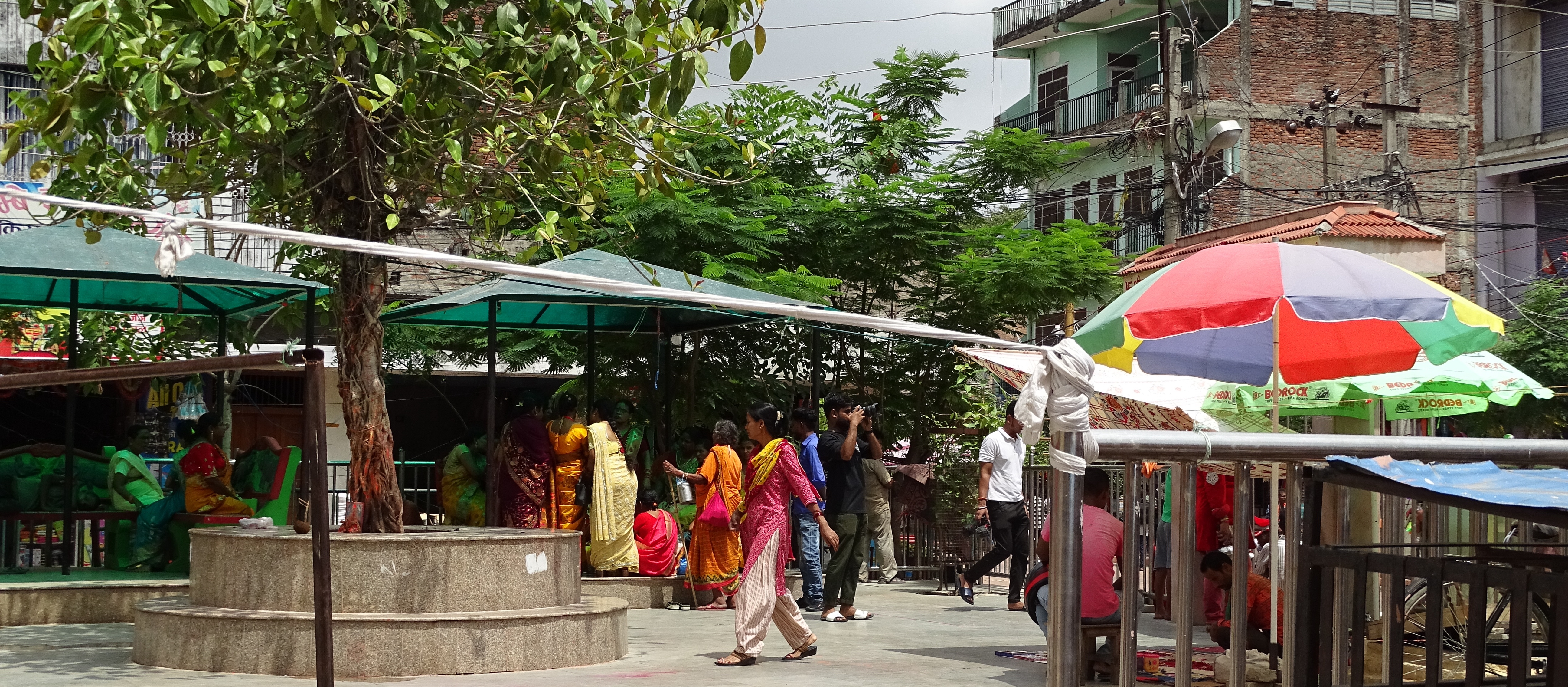
Most Nepalis are Hindus. Their ‘Mandiraharū’ celebrate the same deities as the Indian ones. On that southern border the Nepalis look like Indians, belonging to what is known as the ‘Aryan’ strain. To the north, as I would find out later, is the ‘Mongolian’ strain; people who look more like the Chinese and Mongols. It is an interesting mix, in this small territory between China and India, two gigantic nations which hold three eighths of the world population.
There are also a lot of Buddhists in Nepal, many of them refugees from Tibet. At times you could think you were in a Buddhist country. Hindu Nepalis happily accept Buddha into their faith. They have no problem with Siddartha Gautama who was, after all, a Nepali, born into a Hindu family.
You would imagine the people here must be rich. They live at the source of water for hundreds of millions of Indians and immense rice fields, between two populous, wealthy nations. The trade between these behemoths could be massive, but the Himalayas, the peaks of which are on the Nepal-Tibet border, divide India and China. Transport is dangerous and expensive in those mountains.
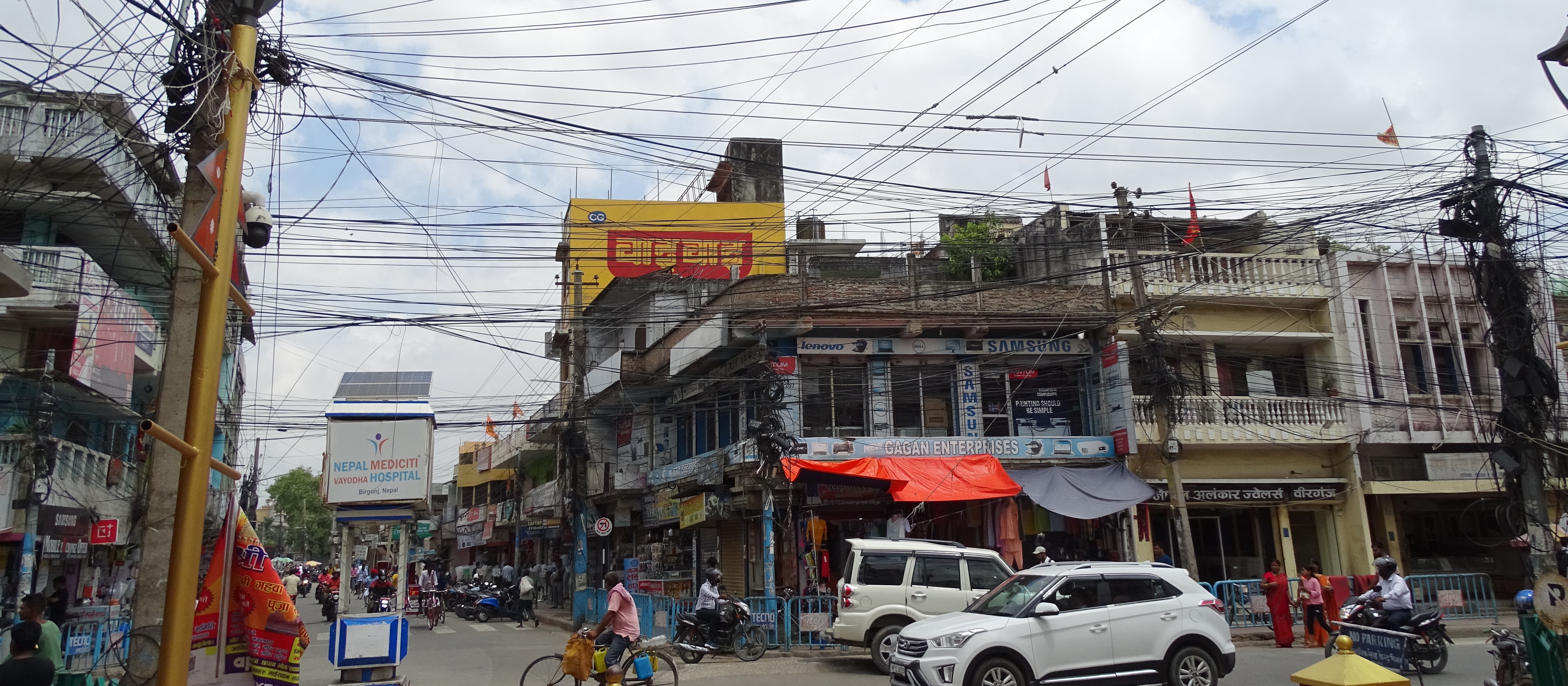
Many locals in Birgunj seemed quite poor, without the overcrowded desperation of some Indian communities, but with little infrastructure to assist them. There is no railway in Nepal. Roads are uneven, and potholed. The electrical system, it could be seen at a glance, was a mess. Walking along the street one day, something brushed my head: an electrical wire slung low between improvised poles. I resolved to be more careful where I walked lest a live cable end my existence in an bright flash of irridescent blue.
There is something magical about people who straddle borders and do not identify with either side. In the past they were mysteries to the settled populations whose education did not include the knowledge of these nomads and gypsies who were able to adventure wherever they chose. George Gurdjieff crossed many borders in his life and always took care to learn something of the languages and cultures of those countries through which he moved. Meetings with remarkable people ensued, as they often do when you travel on the margins.
One month had passed since the bus ride to Sydney. I had known the monsoon would be an influential factor in my travels, and it continued to be so. I couldn’t walk far before I was forced to retreat, soaked in sweat, to my hotel room. I rinsed out two shirts a day in the shower and they dried in no time. It restricted me a bit, but I didn’t mind lounging around. I was always recovering from something. Suffering advanced arthritis, I even had to recover from inactivity.

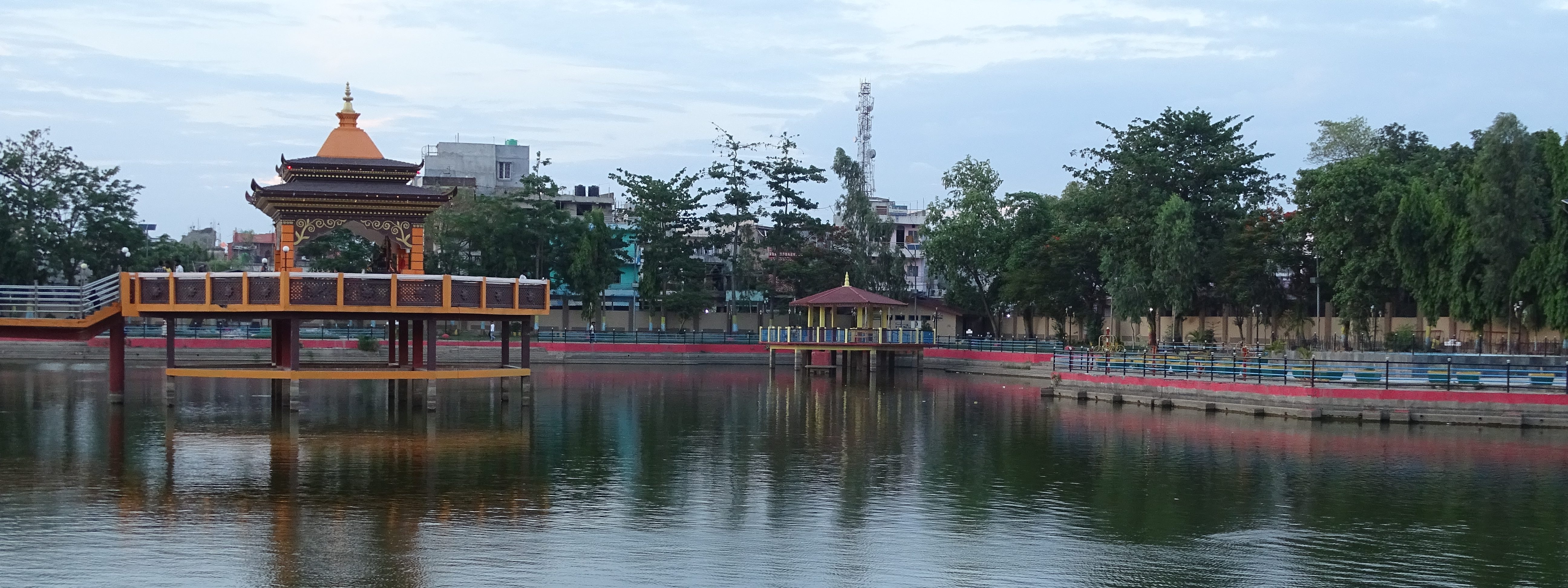
I looked for places where I could drink chai or coffee and watch the locals going about their businesses and daily lives. In Nepal chai became chia, but it tasted the same. There were many small stores and some street merchants. A beautiful lake not far away with some attractive pavillions was frequented by young couples and families and one odd solitary tourist; a lanky Australian with a big nose, a hemp backpack and a camera.
In a sense, this journey was like stepping back in time. That was the first thing I loved about Nepal: it was old-fashioned. People were still relaxed. They had plenty of time. They joked and smiled. Women laughed gaily. There were obviously few regulations because people drove their scooters around with abandon. They fiddled with their mobile phones while zig-zagging through busy streets, passengers helmetless, small children balancing between their parents’ legs, pedestrians blithely crossing the roads with leisurely aloofness. But everyone drove slowly, with consideration, diminishing the danger.
I didn’t venture out much at night but I could see from the window there wasn’t much going on late. It was restful. There were no hoons, late night police chases or ambulances dashing to the emergency department. I rarely saw police on the streets in Asia. Ambulances were more common.
People in Nepal said the traditional Namaste with folded hands and it was more than a gesture. There was a genuine spiritual concern behind it. Religious principles were emphasised and mentioned often. People were thoughtful, with a respect for aesthetics and ethics. Of course these qualities are not the ones that get you ahead in the world…but that is another story.
 Travels to Nepal