

Pokhara

After threading through a traffic jam into the airport and cutting my toe on a trolley’s edge in the confusion of luggage, vehicles and pedestrians in the car park, I queued to enter Kathmandu’s little domestic terminal whose facilities were only just adequate to contain the throngs of travellers. Trolleys were forbidden inside so I had to make several trips with luggage through the chaotic crowds after which there was a surcharge to be paid for the extra weight. My ticket was, I was told, not actually a ticket and had to be exchanged for one at a tiny window elsewhere. The baggage handlers managed that problem then tried to rush me onto an earlier flight. I was forced to surrender my matches and lighter before finally entering the waiting room, to find my flight had been delayed for an hour.
I found a wifi connection and sat on a plain plastic seat calmly awaiting what I felt would be my final flight in that direction. After Pokhara I would be returning this way. I had no intention of gong any further, climbing mountains or taking bus rides on precipitous roads. I had done enough of that when I was young. It was exciting and I loved it at the time, but now, at the age of 68 years, it might trigger a medical emergency or an existential crisis. Pokhara was the end of the line on this particular circuit. I wondered why I had never made it to Nepal in my twenties when I had lived for three years in India, or on any of the other trips I had made.
Nevertheless, there I was, expectant, curious and intrigued. In two hours the short flight would begin, assuming the old propellor powered aeroplane had enough fuel and altitude to take it over the Himalayan foothills and the weather remained kind. Although it was monsoon time there wasn’t that much rain around. There were some gentle showers in the evenings but no storms. The skies were clear. It was an ideal day to travel.

The flight began and suddenly it was over. Low clouds and hill country with isolated settlements were visible through the small plastic windows and we were descending. Pokhara International Airport was a revelation. It was huge, brand new and almost empty.
The plane taxied over near the terminal and we disembarked onto the tarmac and walked across to the arrivals building. The air was clean and it was quiet. The taxi stand outside was a small corner of a massive, empty car park. Snowy, clouded peaks were visible in the distance. There were no buildings around the immediate vicinity. Only a couple of small places could be seen some way off. There were no shops, cafes or houses. It felt distinctly rural.
I had booked a nice apartment a kilometre from Phewa Lake in the area known as Lakeside. I had instructions for the taxi driver and there was no problem until we drew close to the building where he was daunted by a narrow steep road disappearing into a forested hillside. If there was nowhere to turn around up there it would be a long, delicate retreat in reverse to get back down. He pulled over, got out and had a look and decided to risk it.
The last few metres through the heavy gate were awkward, and turning around was a delicate task, but it was achievable. It was a newish building. I was on the first floor with two balconies, one fairly private at the back, and someone turned out to help me with the suitcases. After some comedic scenes where the brand new front door lock jammed and a carpenter had to be summoned I was able to put my feet up with a warm brew.
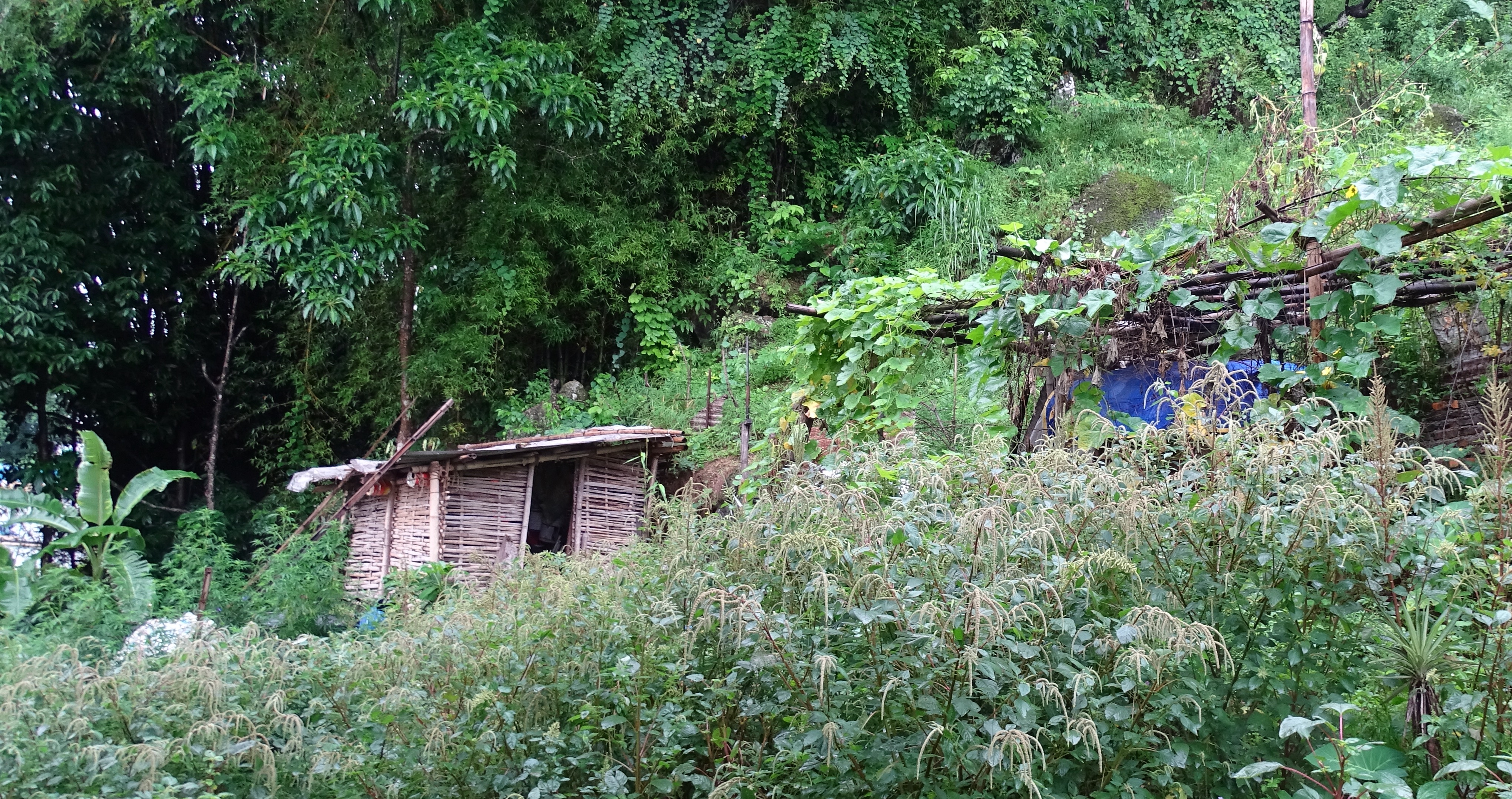
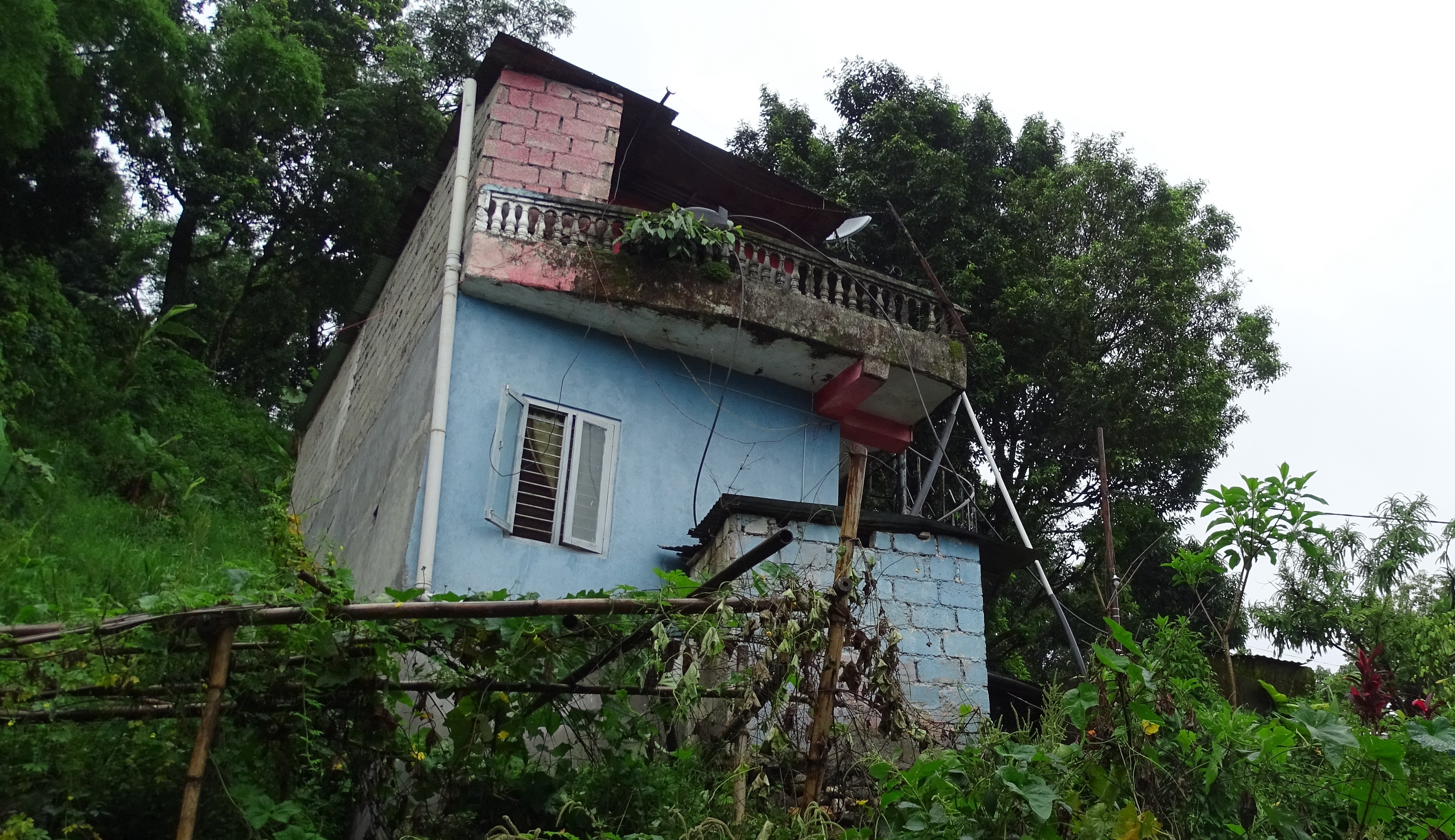
Behind the flat was a wild vegetable garden, a hillside, and a precarious, crumbling old concrete and stone house embedded into a steep slope above, which could only be inhabited by witches or lunatics, I thought. In a country famed for landslides I couldn’t quite get used to the idea of this fragile structure perched up there above me on the slope. Fortunately I wouldn’t be there for long, and the heavy rains had not yet begun. They were a few weeks away.
A band of monkeys appeared from the jungle and raided the unkempt garden. More than a dozen animals, of all ages, with mothers holding babies to their breasts and large males leading the pack, scoured the grounds for food. An old garden shed stood neglected but still useful beside large marijuana bushes growing wild in their natural habitat.
The first time I walked down the hill to the main street I came upon a trio of young, female urchins going the other way. The eldest, about nine, I guessed, held out her open hand to me and spoke clearly and firmly; “Chinese, give me chocolate”. I was a little embarrassed as I had no chocolate and wasn’t used to being approached so boldly by young strangers. I smiled and apologised for having no chocolate. She frowned and seemed not to understand, as if it didn’t make sense, but she shrugged it off after a moment and continued up the street with her young sisters.
I wandered aimlessly that first day, not knowing where the famous lake was or what the locals made of me. There didn’t seem to be any other tourists. I was regarded cooly and mostly ignored, although the people I spoke to were friendly. I wasn’t to know the implications of my presence, the hint of a revival of tourism after covid and the forlorn hope of some recovery from the poverty and disruption of the lockdowns which were regarded, here, as ‘political’. This small, modest nation was at the mercy of unseen powers which ruled from afar and made decisions based on esoteric considerations that would never be fully explained or acknowledged.
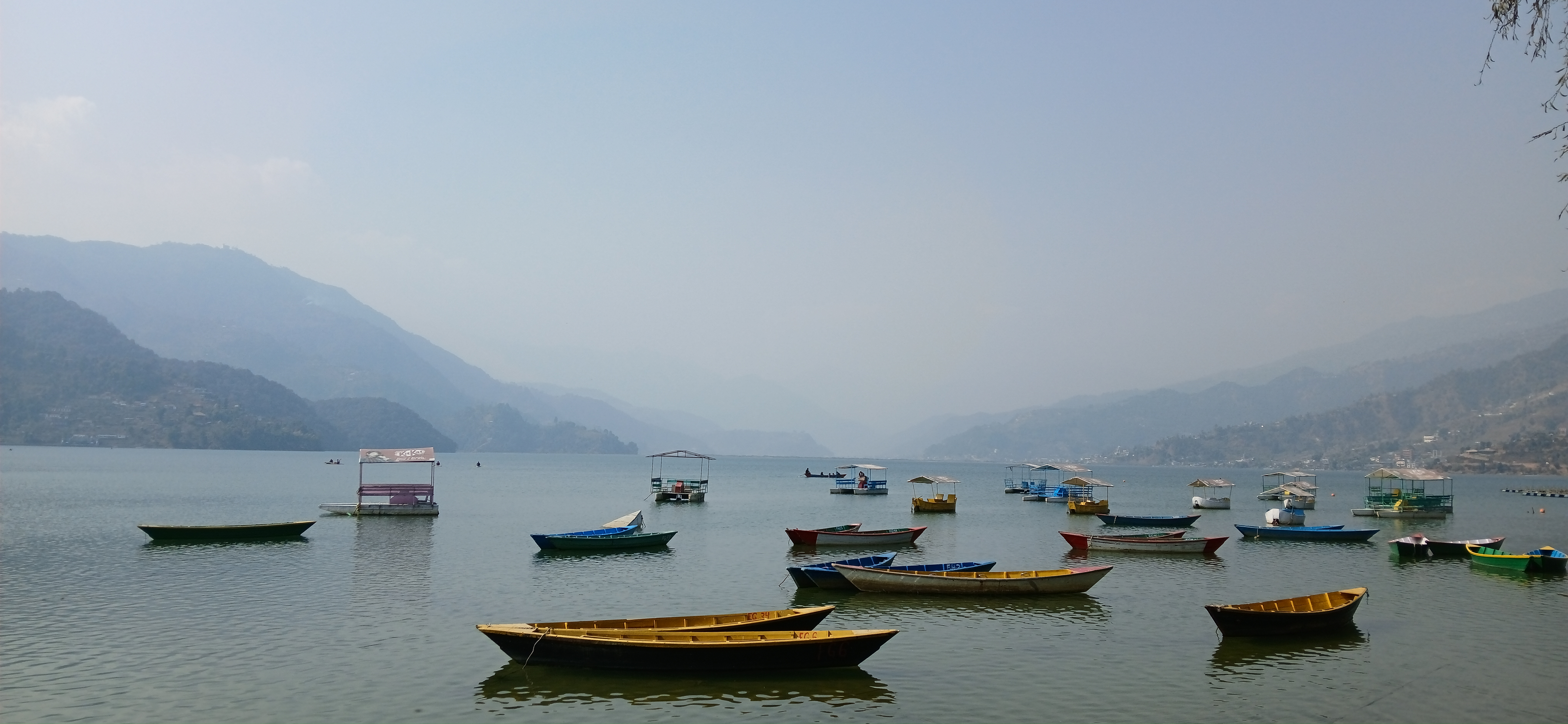
It was a couple of days before I found my way around the main streets and finally happened upon the famous, magnificent Lake Phewa with its archaic pedal-boats, brightly painted canoes, hilly backdrops and rambling restaurants devoid of customers except for a few Chinese and Indians who passed through loudly without spending much money on their hosts.
I immediately found a nice cafe where the staff were cool, friendly and hip. Dub reggae was playing on the bass-heavy sound system and people seemed to float in and out silently. There was a cappucino machine and numerous lounges and cushioned chairs and clean, empty tables. I ordered a coffee, lit a local cigarette and marvelled at the beauty and mystically relaxing calmness of the lake which faded into the haze of distant hills.
This was it, the venue I had dreamed about. The perfect place; Shangri-La with a Buddhist stupa and a Shiva mandir high up in the distance, music floating out over the placid waters and women sauntering past in traditional clothes; the kurta suruwal teamed with plastic Chinese sandals or running shoes, odd but practical combinations. Young men wore track pants or jeans with rock and roll tee shirts. The older ones were more conservative with pointy little hats and long shirts and waistcoats over baggy trousers.
There was an old electric guitar missing a few strings and a microphone with a stand; signs of live music events of the past but nothing was happening now. Lakeside was a bit of a ghost town. I wondered about buying a nylon string acoustic for that cafe so I could pick out some tunes while having coffee and contemplating the calm, picturesque waters. It was magnificently self-indulgent, but it provided an instrument for others to play too and put some funds into the local economy while promoting home-grown, spontaneous music. It seemed like a good idea.
 Travels to Nepal