

Patna

I arrived at Pune airport at about midday after an longish taxi ride. I found a trolley and wheeled it past the armed guards who looked fierce with their bulky old rifles and stern faces.
There was a ticket office near the entrance and a spare seat on the next flight in a couple of hours. I paid with my credit card and was on my way to Patna. Perhaps I could get a train from there to Birgunj on the Nepali side of the border.
Arriving past sunset after a couple of hours in the air I again passed armed soldiers, more numerous this time, and found a cab driver who spoke some English. He was driving a large van with seats in the back, without any marking to indicate it was a taxi. I asked if he knew of any cheap hotels but as usual I ended up at an expensive place which was well equipped. It would only be a couple of days. I felt sympathy for taxi drivers, having been one myself in Sydney for a year and a half but around the airports they were hunting for commissions and windfalls and not being helpful, as suburban drivers usually are.
Patna, a big city by Indian standards, is the capital of Bihar, a large populous state bordered by Nepal to the north. It has been notorious, in recent times, for banditry and insurrectional mayhem but the people seemed gentle and friendly. It was obviously poverty which made the place dangerous, not the temperament of the people. This was a distant outpost of the empire, far from central control and urban security.

At some point I lost the jackeroo hat I had worn from Australia. Maybe I left it in the plane on the empty seat next to me, or in the taxi. Perhaps it was unsuitable for the trip from now on. I did want to fit in with the locals, to show respect for their dress habits, customs and manners. An Australian cowboy hat would have been unique and would have attracted attention. I wasn’t sure I wanted that. It was gone, in any case, for good.
Checking in to the Grand Hotel made me feel decadent but at my age it was no longer desirable to stand around on the street haggling for cheaper deals. I was sixty eight. I needed a break. I knew that I would be exploited at times, overcharged and misdirected but I accepted my fate. It would cost me a little more but it was within budget and there was no point in agonising over it. I was lucky, blessed, as I was reminded all the time by the poor people around me who were struggling day to day to survive, and, rarely, prosper in the modern madhouses of these vast metropolises. I was ready to reward anyone who helped me in any way, especially the poor ones who really appreciated any sign of generosity.
There was a cricket game on somewhere and I had hopes of sitting back with a coffee and cigarette and watching it on TV in my room and although this was theoretically possible it wasn’t destined to happen. The restaurant was closed but they were able to rustle up something for me. The multi channel TV did not have the right channel for the game. I didn’t have a light as the airlines did not allow matches or lighters on board and the concierge assured me he would get one for me.
This didn’t happen either and when I asked again he calmed me down with thoughtful, philosophical words. Everything would come, I would have everything I wanted, I just had to calm down and wait patiently, but still there were no matches. Finally I went out onto the street at a late hour searching for a cigarette wallah and I was surprised at how desolate and hard-bitten it was out there. People spoke little or no English and I felt fortunate to get what I needed and find my way back from that dusty, desolate wasteland. I hadn’t gone far but I had got a sense of the city and its poverty. It was hostile, dry and very hot.
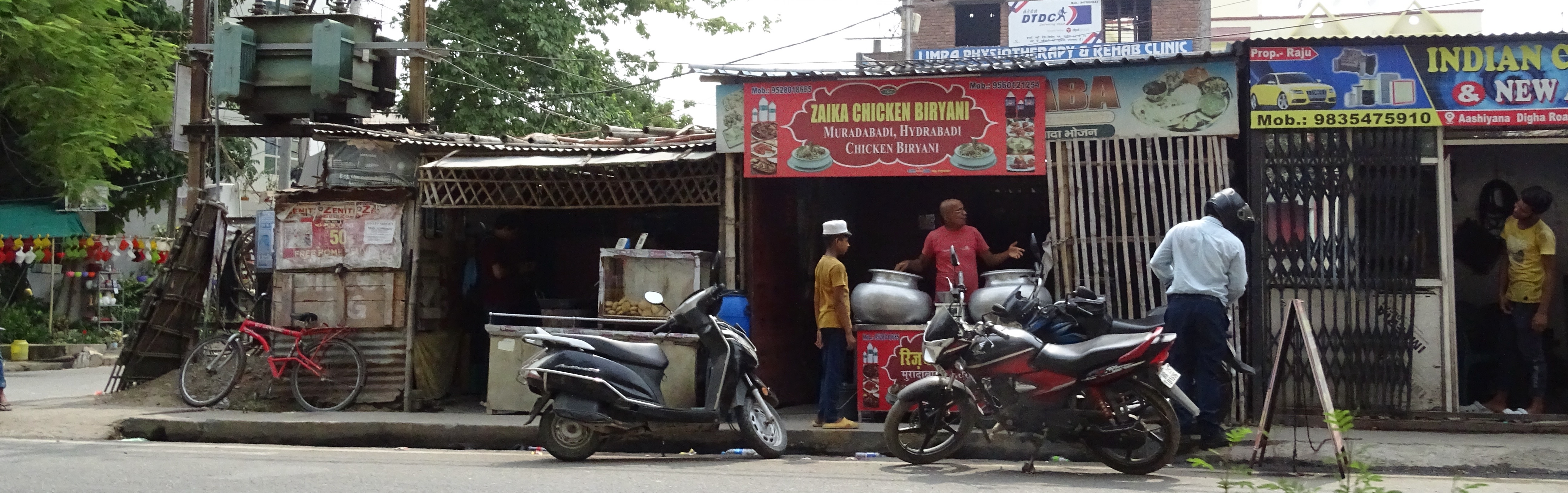
The next morning when I ventured out the heat was brutal. I had hoped for a stroll and a cup of tea with some locals but the sweat was pouring off me and I could find no suitable shelter. There wasn’t any inviting cafe or restaurant, only a poor looking chai stall with snacks. There was a fruit and vegetable market on the side of the road underneath the freeway overpass but the pollution made it unappealing. If it had been cooler I’m sure I would have found some interesting places to visit in Patna but it wasn’t cooler and I saw nothing much outside of the hotel from which I made only brief forays.
I had one one thing on my mind; to move on to the next town. On the map I could see a couple of towns between Patna and the border. Muzaffapur was about a third of the way and Raxaul was right on the border. On the Nepali side was Birgunj, where I would get my passport stamped as I already had a visa form filled out online, submitted and accepted, pending payment of one hundred and fifty US dollars at the border for three months extendable to five with further payment.
Between Muzaffapur and Raxaul the major town was Motihari; the birth place of George Orwell. I considered stopping there for a chai but none of the Indian towns on this journey seemed particularly attractive at this time of year. I had arrived in Mumbai in early June with the monsoon and followed it as it moved north. For locals it was, no doubt, different, but for this tourist it was difficult to find a nice spot to relax outside of air-conditioned hotel rooms.
Although I’m sure the concierge at the Grand Hotel wanted to help me he just couldn’t. He had promised to find me early but he didn’t turn up and when I found him downstairs he was busy behind the desk. It was a hot sweaty wait before a junior attendant got hold of a phone and booked me a cab to Muzaffapur. It arrived promptly.
The young driver bravely tried to communicate with me, pointing out famous landmarks like the State Museum which I hadn’t known about and the large new bridge and highway we were taking to the north. He was an interesting looking person, a combination of the modern and the old. Hip with traditional values. He was relaxed and cheerful and good company.
It was nice to breathe the country air again. We stopped for a chai at a traditional shop on the way where the prices were at historical lows and change was as rare as a river on those blistering plains. It had a dirt floor and rough wooden poles holding it up. It had been a hot journey since Vietnam but the heat was becoming more intense with each step of the way. The monsoon was off to a shaky start and even a cyclone to the east towards Pakistan gave no relief.
We were going north, though, and slowly approaching the Himalayas. Things were going to plan. I was making progress and moving steadily closer to my destination.
 Travels to Nepal