

Kathmandu

Strangely, unexpectedly, Kathmandu reminded me of the Sydney of my youth. There were the winding back alleys, the small shops, the poor people, the downtrodden battlers coping with inadequate infrastructure and stinking smog, smoking and laughing with the wry humour of the lower castes. The old overgrown houses, the detailed architecture, the straight-forward honesty of the people, there were many things in common. Even the occasional blackouts and the smell of diesel and smoky exhausts.
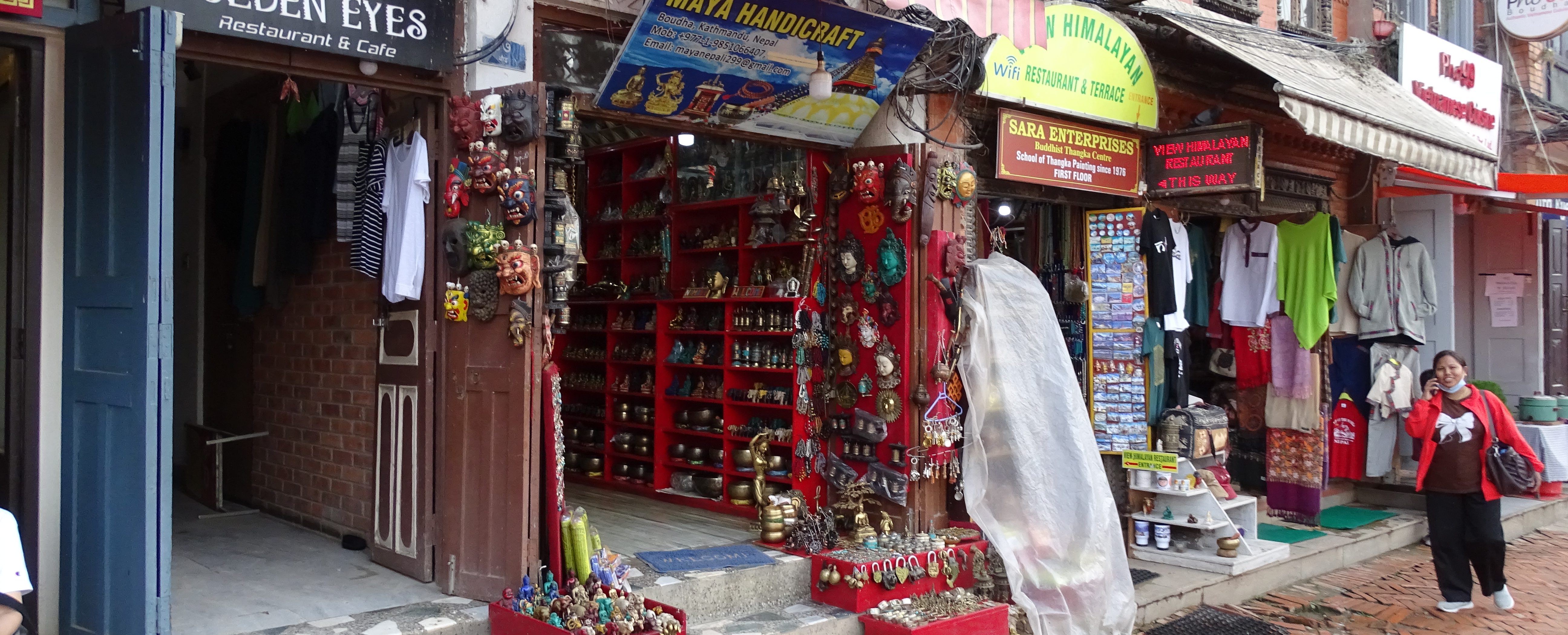
I soon learned the way by foot to Thamel via the junction at Sorakhutte with its long distance bus stands and gesticulating traffic cop, past tiny shrines, through the narrow, muddy lanes into the red-light district, so full of Tibetan artifacts that it seemed like a suburb of Lhasa.
Some desperadoes tried to sell me hash, or charas, shopkeepers greeted me and tried to start conversations. The atmosphere was usually friendly until desperation sometimes broke through and I felt terribly sorry for all the proprietors of empty stores and restaurants and street merchants who could find no tourists to buy their wares. I was one of the early visitors to arrive after the Covid 19 lockdowns which had hit particularly hard in Nepal. The economy was sensitive to the impact of tourism and the foreign currency it brings and, after years of restrictions people were suffering.
Many young people had come to Kathmandu from the villages to make money to send back to their families but before long they were struggling themselves, and then they dreamed of making it overseas to Australia or Japan or Qatar. There were success stories they had heard, relatives of friends who had done well and come back home after a few years to buy land and set up businesses, but perhaps they were a lucky few. Almost everyone I met had a family member in Australia. They knew more about Sydney than I did.
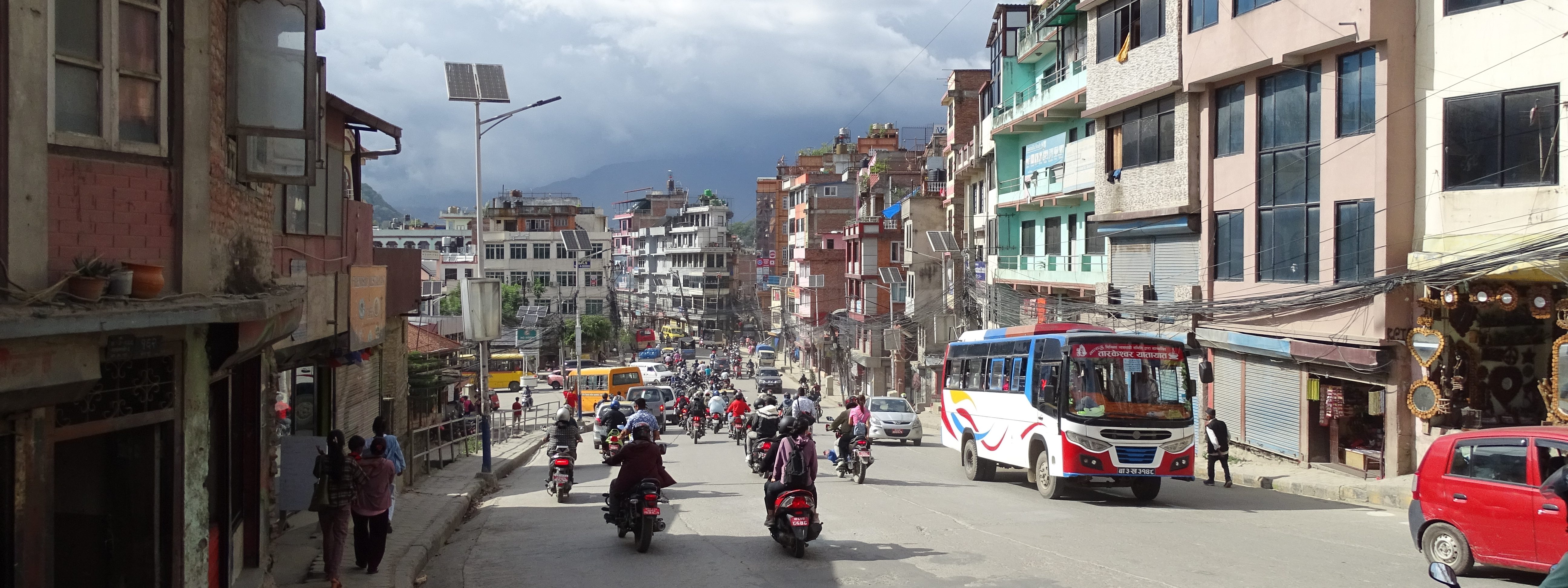
The footpaths were broken and uneven, the most obvious remaining damage from the 2015 earthquake, another massive blow to the Nepalese economy and standard of living. Many important temples had to be rebuilt, but not for the first time; earthquakes have regularly devastated the region for thousands of years.
Kathmandu is composed of four towns which were once separate and independent so that often on maps there was no mention of Kathmandu but instead there were Bhaktapur, Dhading, Nuwakot and Lalitpur, and others too as everything seemed to have at least a couple of names. The language is like Hindi, but different. Different enough that you need to relearn everything and my tired brain wasn’t up to it just then.
The former Royal Palace where the 2001 massacre occurred is now a museum. Photography is strictly forbidden. I asked a taxi driver why and he told me that if people could take pictures everyone would know what was there without having to pay for it. It made sense. The entrance fee was double for foreigners. The were concessions for the aged and the young and others. While it looked magnificent from the outside the rooms were a bit dank. The carpets were worn, though still fine. There was plentiful art and jewellery, paintings everywhere, especially portraits of exotic ancestors, comfortable, elegant furniture and the small courtyard where the massacre happened. There were helpful illustrated signs which explained where the shooter and victims were. Nine members of the royal family including King Birendra and Queen Aishwarya died. It was slightly ghastly.
The most famous mandira is the Boudhanath Stupa; an impressive monument to the man who forbade monuments to himself. Although first built by a Nepali King fourteen hundred years ago it is a holy place for Tibetan Buddhists. It is surrounded by shops and restaurants in alleyways and guesthouses which sell Tibetan and Nepali crafts and materials. The massive gold steeple with the magical eyes gazes down impassively on thousands of disciples and tourists a day, while old pictures show it standing alone in a paddock only fifty years ago.
The other main tourist attraction was the remains of the ancient city of Basantpur at Durbar Square. I was met by a well-trained guide who had an excellent spiel. It was OK while I was getting good pictures but became a danger when I ran out of energy in the heat and he was anxious to get in a few more plugs for his friends and sponsors. I nearly passed out in a healing-sound-bowls room where I apologised to the young lady and told my guide for the third time that I needed to get out of there and back to the car. He displayed no noticeable compassion and charged me extra. I was so frustrated I gave my driver a huge tip because if I didn’t give it to him, I reasoned, someone else would extract it from me, such a soft touch was I.
The temples in Durbar Square, which were still undergoing meticulous repairs, had been destroyed, damaged and rebuilt several times. There were no bright colours or flashy displays. This was ancient architecture, revered for its age and authenticity. That was the trademark of Nepali culture. Like the peaked rooves and the stylised Sivas, it was a product of the distant past in a remote, mysterious region; the one where Siva, Buddha and Kassapa had walked, lived and died. It was a place of genuine spirituality and it didn’t need authentication from anyone.
My apartment was on the first floor of a new building on a back lane in the suburbs a few miles from Thamel. It had been built with old materials in a traditional style. The small yard was sealed by a large, ornate, metal, black and gold gate. There was a small shrine near the front door and a space for shoes and umbrellas. It was overgrown with greenery intruding onto the balconies and came with a warning to keep the balcony doors closed when unattended ‘because of monkeys’. The apartment had a lounge room, two bedrooms, bathrooms and balconies and a kitchen, much of which was unused.
It was a little way back from the main street via a few tangential laneways which led past several smaller houses, and a few equally large ones. Street sellers came wandering through the alleys with distinctive cries and songs advertising their wares and services. There were repairers of domestic implements, fruit and vegetable sellers and others who were a mystery.
One lady who looked like a gypsy came around selling lemons and spinach wrapped up in a piece of cloth she carried on her shoulder. She wore an old scarf around her head and traditional clothes on her skinny frame. Her deeply lined face told of a hard life, but she was surviving with her humble business. She was there every morning and I learnt to recognise her call, though I didn’t understand it. I gave her a little more than what she asked, which was very little, and she was pleased. Every morning I tried to buy something from her but I didn’t know how to cook the spinach. I wasn’t even sure it was spinach, but it looked something like it. I asked my hosts about her but they didn’t know her.
 Travels to Nepal