

Ho Chi Minh City to Mumbai
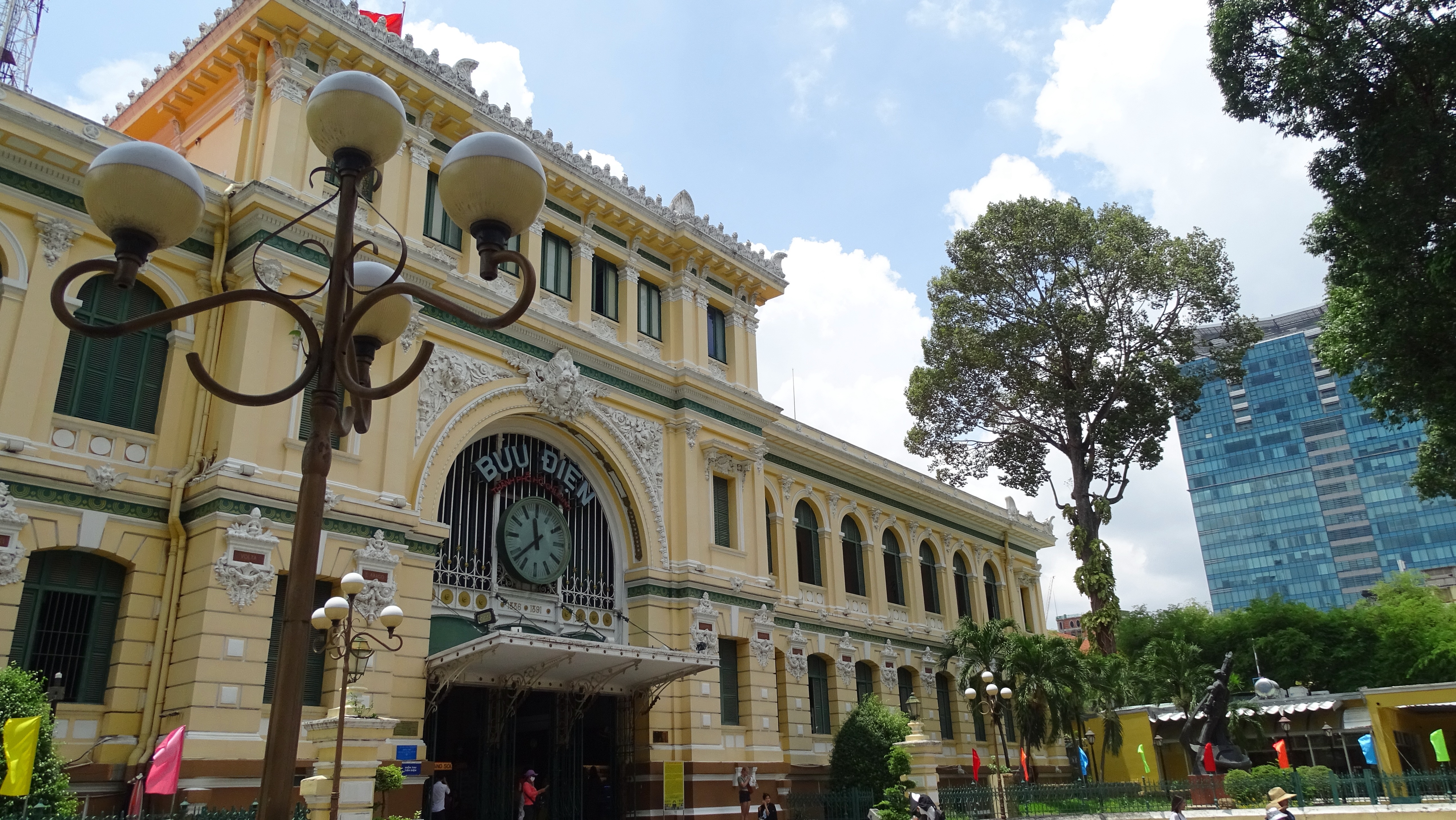
After obtaining a one-month tourist visa for India I booked a direct flight to Mumbai, from where I imagined I would be able to take a train to the Nepali border. I chose a Vietnamese carrier and booked online. Then, magically, the morning after I booked the ticket I had a call from customs; I could pick up my guitars.
I visited the airline office to confirm my ticket and decided to go business class for the extra luggage allowance. It would be an experience; my one and only time. I had always wondered what business class was like.
Now everything was ready. I would have the full contingent of guitars and suitcases to carry across India and into Nepal. I farewelled Hong, of whom I had grown fond, and her sons and took a cab to the airport in the afternoon.
I had plenty of time to wait because the airline office had told me to arrive early to be sure I could make arrangements for my extra luggage. As it happened that wasn’t necessary.
I had three sources of information about the luggage allowance and they all gave different accounts. 1 bag up to 35 kilos, 2 bags at 20 kilos each, an allowance of 60 kilos all together, and they won’t take anything more 119 centimetres long, etc.
When I got to the check in there was a slight problem with the ticket. The printed copy I had with me didn’t mention that it was business-class. The official perused it and then asked me “Can you see anything to indicate this is a business-class ticket?” I looked carefully and noticed the price at the very bottom corner. It was triple the economy fare. I pointed it out to him and he nodded and proceeded to book me in. There was no mention of a luggage allowance, lengths, kilos etc. He simply took the guitars, weighed and tagged them and the suitcases, and put them through, hardly saying another word.
This was becoming my experience; the obstacles I worried about the most didn’t cause even a ripple of concern. They were imaginary. There were some real problems but they could be overcome with a little patience.
I went through customs, where a man glanced briefly at my papers and nodded me through with a bored but not unfriendly expression, then came the security checks. I removed my belt, shoes, emptied my pockets, put everything into the machine and hoped it would all come through the other side. A lady in a dark blue, soviet chic uniform instructed me to remove my hat after all that so she could check I wasn’t concealing anything up there.
Everything came through, and I put it all back together and ventured into the secure departure area.
There was a business lounge, somewhere, for my airline’s business class passengers, romantically known as the Rose Lounge, but no one knew where it was. I walked up and down a few times, asked a few people. It was shared it with another airline. I saw inside one business lounge and it looked nice, like a luxury cafe with large booths and dark leather-clad lounges, almost empty, with a genuinely friendly and helpful steward. She told me about the Rose Lounge.
It was a busy airport. There was a plane taking off every minute. There was a queue of planes waiting to take off and a stream coming in on another runway a little further away. In the background I could see white houses and buildings of the city sprawled in every direction, a maze of lanes and roads and parks and few tall buildings.
I heard the last call for passengers going to Manilla with Air Philippines. The impersonal female voice pronounced it ‘money-la’. Then there was an announcement that my flight had been changed to a different terminal. Hundreds of people hurriedly grabbed their hand luggage and trekked half a kilometre to Terminal 10.
I joined the queue to board the plane, through to the very last check of the boarding pass but when the checker saw my ticket he told me to wait, he would call me and the ‘rapid car’ would take me up and into business class, which was good because the regular buses resembled Indian ones, with Indians packed in and hanging out of doorways and windows.
When the rapid bus arrived I was the only Business Class passenger. I confirmed this with the driver. There were twelve seats in Business Class and eleven were empty. Business Class, which cost four times as much as economy, included a large baggage allowance, endless legroom, five-way adjustable chairs, a meal menu and service from a pretty girl dressed in shorts. The men wore more conservative attire.

After a while some passengers silently moved up from the back and occupied the spare business class seats and the staff did nothing to deter them. They seemed to be all sleeping comfortably as the flight wore on in the darkness. The droning motors and dimmed lights were dully restful.
Five or six hours passed in perfect comfort. I read some of a book I had acquired on the life of Ho Chi Minh, the great leader, but it was not captivating. I ate well and might have dozed for a while. I hoped, with fanciful imagination, that bad weather in Mumbai might force us to land in Pune, but it didn’t.
Eventually the pilot started making announcements as we approached our destination. He said there could be delays but we might be lucky and arrive at 11.00pm. We seemed to be descending and I saw the lights of a great city below, like filigree silver against the night. We were getting closer, I could see roads and individual houses. We were coming in to land.
India!
 Travels to Nepal