

Birgunj to Kathmandu

Birgunj was the smallest town I had stayed in since leaving Armidale. There were a few main streets over a couple of kilometres which contained most of the local attractions. There were two Shiva temples, the lake, a busy bazaar, and the clocktower. The airport was well out of town and apparently there was a seldom-used railway station somewhere nearby. There was no train line to Kathmandu.
Most of the tourists here were Indians who could just drive across the border and enjoy the cheap but excellent liquor without a visa or any formalities. The Indian rupee is tied to the Nepali rupee at 3:2. Two INR equals three NPR. The Indian economy has a big impact on Nepal, and the muscle to get its way, most of the time.
Cheap Chinese imports were flooding the market and the men wore jeans or track pants. The women wore long kurtas and traditional leggings while many teenagers were experimenting with western styles. If you saw a Nirvana tee shirt, it was about the American band, not the concept of enlightenment attributed to Gautama Buddha who was born a hundred miles away in Lumbini. There were no lungis in sight, or hats, they didn’t seem to be popular here.
The food had a lot in common with India but there was a lot more meat. The Nepalese are not given to vegetarianism. As a vegetarian myself this was not a problem as there was plenty of good food I could eat at very reasonable prices. There is a practice in Nepal of charging extra to foreigners, but even the adjusted prices are cheap compared to most countries.
There was a public water hydrant across the road from the hotel where people would fill containers or wash their feet. There were stray dogs in the streets, as in India, but they weren’t hostile; they seemed to know their place and kept their heads down. I was appalled at the dangerous, wasteful state of the electrical wiring which was worse even than India. Huge clusters of wires were attached somehow to convenient poles and I watched, one morning, as a worker wearing thongs with no gloves or protective clothing climbed a fence to reach a bunch of wires and make some minor adjustments.
When I tried to get a rickshaw to drive me around town the first driver refused. He told me I would have to take a bicycle rickshaw, with a man pedalling for me. I didn’t like the idea but it was the only way. Like the compulsory horse and carriage across the border, this quaint rule was probably, I imagined, an old decree that saved the livelihoods of a class of workers who were being overtaken by progress and Western technologies. In old Nepal the Kings made various rules designed to preserve the traditional culture of the country.

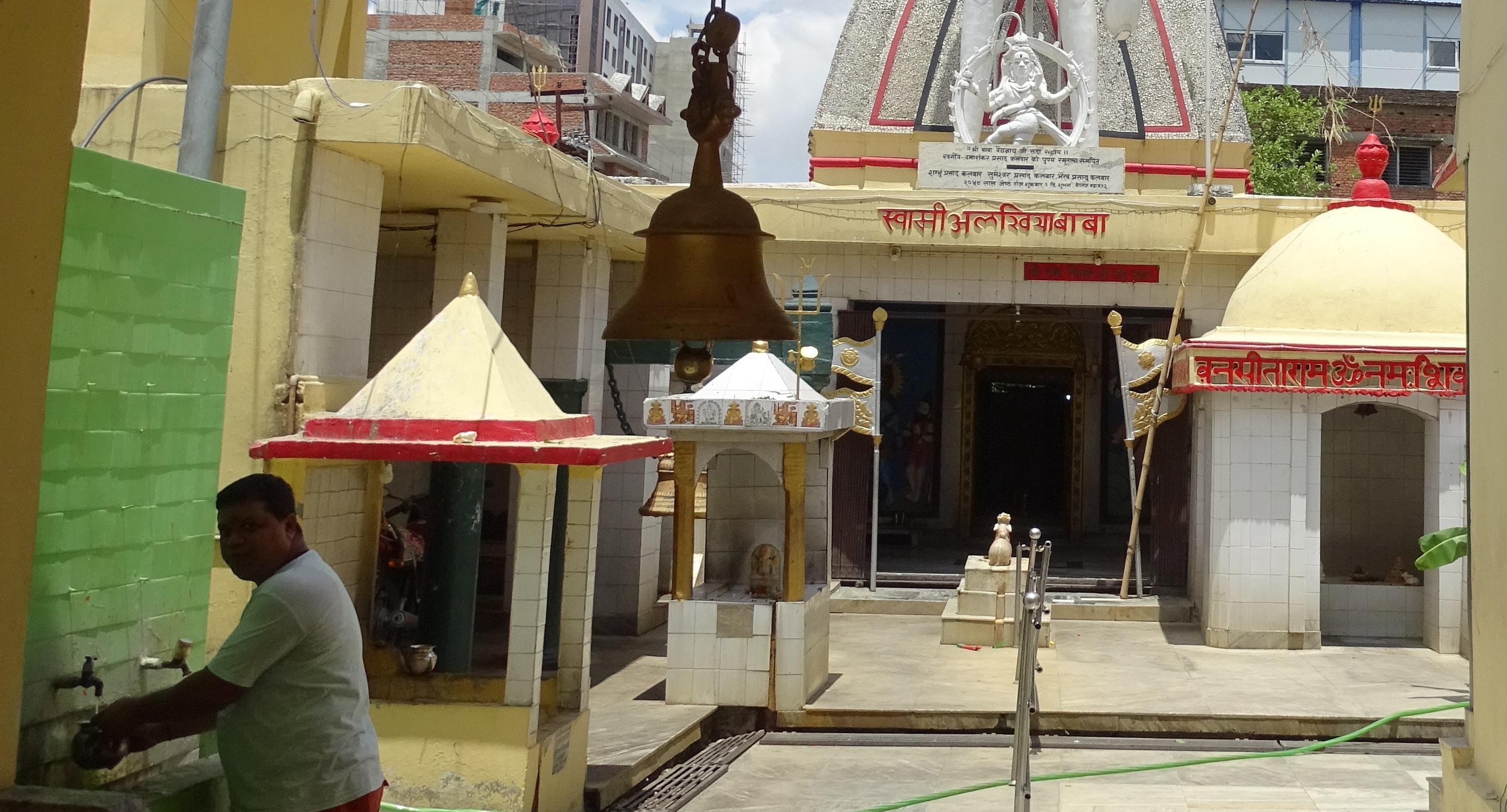
I visited a temple and the friendly pujari smiled and inquired of my origins. He was unaffected, totally unlike the monks in Vietnam. He offered to pose for pictures and I might have him in a few shots. The temple was relaxed and casual. The central deities were not grand or leafed with gold. They were small dark figures in deep recesses that were ancient and had that dour look of authenticity that comes from hundreds of years of existence.
Since India everyone was curious about my nationality. They were always happy that I was from Australia. They had an interest in cricket, or family in Melbourne or somewhere and they would reply “Ahhh, Australia! Very good country!” and I would agree with a smile. They knew of people who had done well there, and they would nod their heads and say “But very expensive in Australia, everything very expensive.”
I obtained a Nepali sim card for my cheap Chinese phone in a office which had cube-shaped cushions for chairs, a security guard and young attendants who spoke good English and tried to be helpful. The number I was allotted looked auspicious with lots of sevens and nines and it worked. The rate, all inclusive, was cheap, almost negligible. I would be able to stay in touch while travelling. I was now ready to leave for Kathmandu.

I could fly to Kathmandu or take a four hour bus ride over a hundred miles of reputedly rough, pot-holed roads. The fact that the short journey took so long meant the roads had to be bad. I didn’t like the idea of subjecting my electronics and guitars to such conditions and the flight was cheap, around a hundred dollars. There were flights going all day, but not at night. It would take twenty minutes and presumably the scenery would be impressive.
I bought a ticket at a travel agency run by some Indians. As usual I made sure in advance that the airline would take all my luggage without too much extra cost. Then I booked an apartment in Kathmandu, self-contained, not far from the centre of town, for a week. That would give me time to rest and make further decisions. I hoped to get involved in some music but I had no idea what would actually happen there. The future was a mystery.
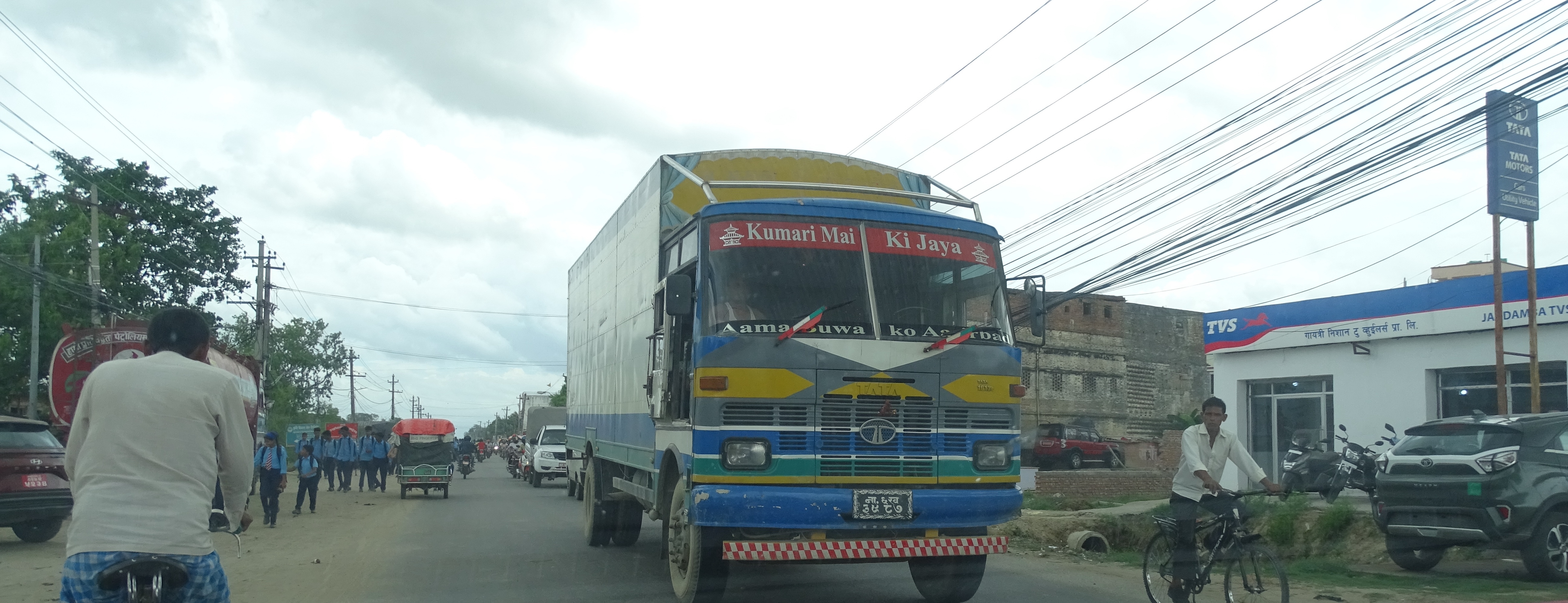
The hotel arranged a taxi for me and after tipping the staff I received a nice send off as the suitcases were clattered into the boot and I managed the guitars myself with a little extra care. We drove through wide dusty streets towards the north. On the highway we passed a moving bus, on the roof of which was a man tying something down with rope.
We passed through what seemed like an industrial area with small, grimy factories before we arrived at a tiny airport with a small waiting room and minimal facilities. There was a decent smoking room in a small separate building and portable plastic chairs in the waiting room which was adjacent to the tarmac. The lawns and gardens had not been maintained and looked a little scruffy. When the time came to board we simply walked out to the plane, a twin propellor model with room for about a hundred people, which was parked nearby, and climbed the short staircase. There was an uncomfortable delay on the hot runway for some reason as we sat in the sweltering cabin but then we were off. The terrain was suitably mountainous and cloudy and in no time we were landing in Kathmandu.
In the tight little baggage room at Tribhuvan Domestic Airport I struggled through some haughty Indian tourists to retrieve my various items and managed to get them outside, one by one, to where the reliable, prearranged driver was waiting. He spoke some English, was relaxed and friendly, and we were into the heavy late afternoon traffic of Kathmandu, which took longer than the flight. My hosts were there when we arrived waiting to grab my bags and cart them through winding lanes away from the main road and into a four storey house whose traditional style, like a few other older houses crowded in amongst abundant foliage, contrasted with the modern concrete structures around it.
 Travels to Nepal