

Birgunj, Nepal
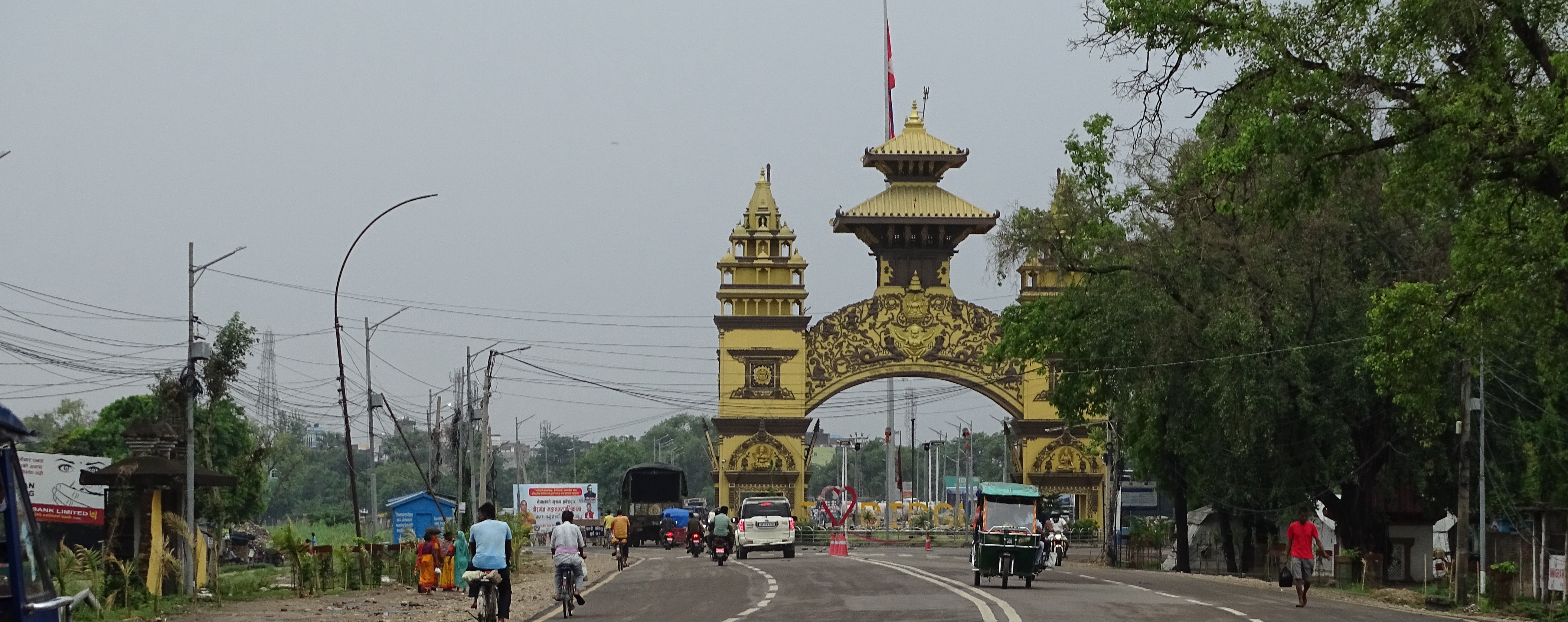
The train ride was relaxing but I was awake with anticipation. I would finally be arriving in Nepal, on the southern border, at a town called Birgunj. I didn’t know what to expect except for wary customs officers with computers and I hoped that stage would not be too complicated. It could be easy and quick, if everything went well, or hell if they decided to make my life difficult.
The train was making steady progress through the Bihari countryside, past rustic villages, rice-fields and forests. We stopped for a few moments at Motihari, the birthplace of George Orwell and I was glad I hadn’t alighted there. In that heat there would be no pleasant sojourns or comfortable places to sit and pass the time. It was better to stay on the path and continue as quickly as possible towards my destination.
In the new India smoking was restricted much more than in the old. Modernity had brought conformity and everywhere was becoming the same country, with the same rules and obsessions and it was alarming to see how easily the public adopted and supported these new restrictions, occasionally with fanatical zeal. It was pleasing, though, to find that there were still loopholes and ingenious ways some old holdouts, like me, could maintain their preferred lifestyles in vain resistance to the progressive dehumanisation of society. There was still a place for us throwbacks, but only just.

There was nowhere on the train I could smoke, legally, but there was the section at the end of the carriage with open doorways where I stood alone for some time and decided to take the risk. There could be a fine, or a commotion, or some judicial hurdle, but I didn’t care. I would deal with that when and if it was necessary. For now I was in a celebratory mood. The end of the journey was in sight and I would soon be in a new country, one I had known about for forty years but to which I had never travelled. I leaned out the doorway and savoured the sweet moment and the strong Indian tobacco as I watched that ancient country disappearing behind me as another approached.
There was a long halt in the middle of nowhere, then we started moving again and suddenly we were at the last stop; Raxaul. The clear morning skies had turned cloudy and there was drizzle for a while. The station was not crowded. Broad-leafed palms dripping from the light rain seemed appropriate for this tropical outpost. From here, I understood from the rickshaw drivers, I would have to take a horse-drawn carriage to the border, with one last inspection on the Indian side and then onto the Nepali immigration office where I would pay for my visa and proceed to Birgunj. The carriage had a roof of sorts and we kept dry until it cleared up and the bright hot sun reasserted itself.
In the Indian office they slowly went through the formalities, checked my biometric data and waved me on. At the last moment I was summoned to wait outside an office where a more senior official, fresh-faced and smartly dressed in a pale uniform, was brought out to examine my guitar case. It was the electric guitar; they hadn’t noticed the second suitcase and classical guitar hidden at the bottom of the pile, and naturally didn’t suspect that I would have so much stuff with me. The official wanted the case opened and asked me if I intended to sell the guitar. I replied with an emphatic “No”. He smiled and sent me through.

A little further on we came to the Nepali immigration office which was in a tropical-style homestead with a wooden verandah and some tables and chairs arranged in a relaxed manner that felt homely and informal. There were a few officials but they were dressed casually and seemed friendly. A couple of other tourists, from Europe, I guessed, were struggling with some details on their forms while I waited on the couch.
After a while I started to worry about the guitars which were still on the horse-drawn cart parked outside and possibly exposed to direct sunlight. The tropical sun could damage a guitar fairly quickly, as I had found out in northern Australia, and I was a bit anxious to get going.
Finally it was my turn and it didn’t take long as I had already arranged for my visa online. I had read that I was required to pay in US dollars but had forgotten that detail until now. I had no US dollars on me but I did have some Australian ones and I pulled them out to pay the fee. It was suggested that I could return back into India briefly to acquire a suitable amount of Indian rupees, if I liked, but the idea filled me with dread. At no stage did I want to go back, especially not now. What if they noticed the second suitcase and guitar? My driver was becoming impatient too. If this took too long he would be losing money. To say nothing of the suffering of the poor horse.
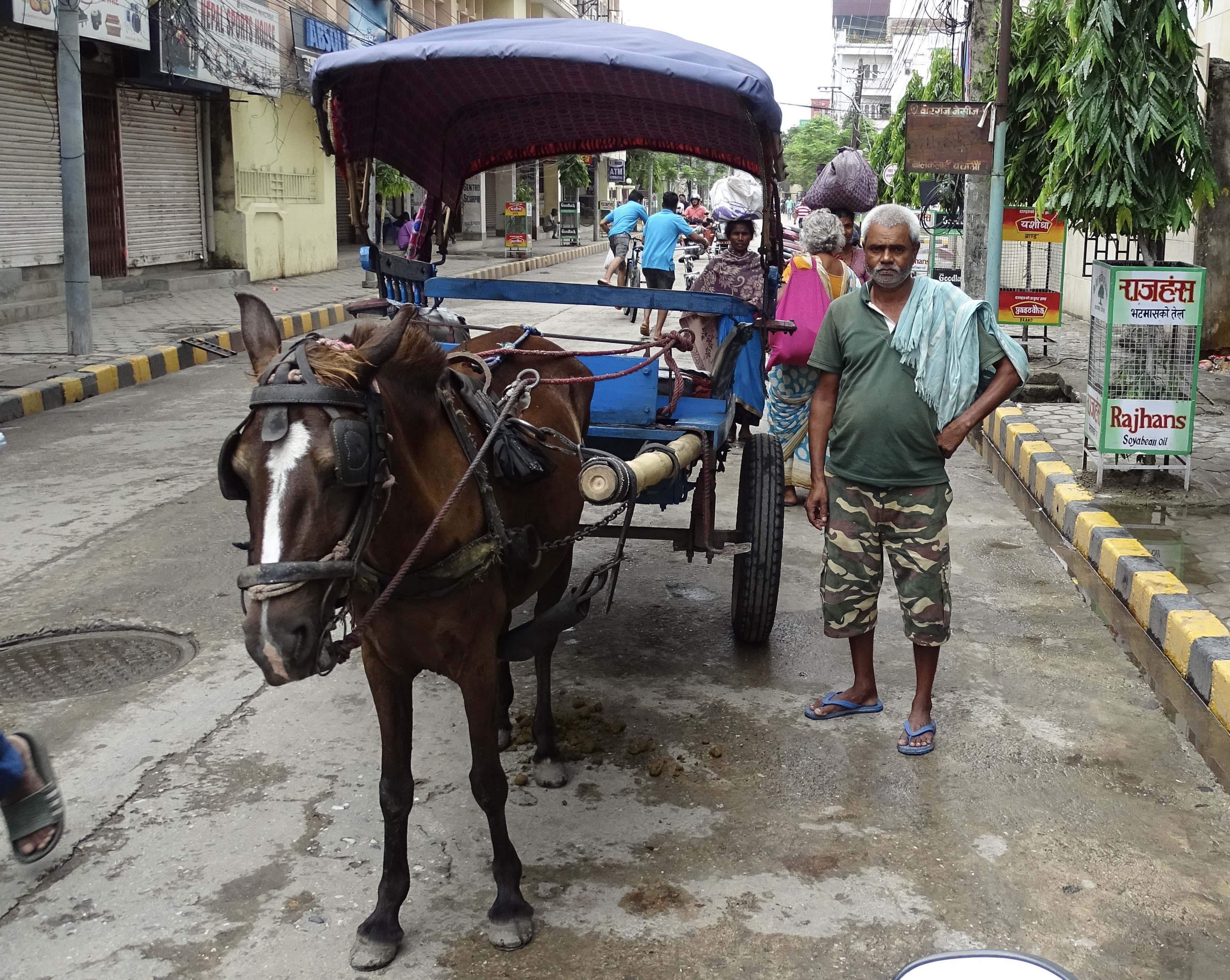
We settled on the appropriate number of Australian dollars, some change was found and a little sticker was pasted into my passport, granting me three months entry to Nepal. That sticker looked so good on its own page. The last hurdle had been overcome. I had arrived. I could scarcely believe it myself but there it was. I was now in Nepal and free to find a hotel and begin exploring the local culture. A three star hotel which sounded good and was surprisingly inexpensive had been recommended to me at the consulate and that was where we were heading. We would be there after ten more minutes in that archaic vehicle, pulled by the tired but sturdy little horse who carried out his duty with resigned obedience.
The streets looked poor as we passed through the secure zone surrounding the border. I had my video camera out, determined to catch vision of this rare and exotic crossing which I would probably never make again when, to my horror, we were pulled over by some Nepali soldiers. I suddenly remembered that filming is restricted around international borders and cursed myself for not being more careful. I shut down my camera as a soldier approached and offered to open my suitcases for examination. He laughed and said no, it was OK, just no filming. He didn’t bother checking my camera once he had seen it was closed. I was amazed at how friendly and good-humoured he was. A soldier who was relaxed and cheerful. I had never seen that before. It was a revelation. I breathed easy, thanked him and we continued on in the rickety carriage to Birgunj.
Fortunately the hotel was on the near side of town and the driver knew where it was. I tipped him well when we arrived and requested a photo to which he consented and for which he posed with stern, manly countenance. He was bunging it on a bit but it wasn’t out of character. Two passing beggars asked me for money and I gave them a few coins which didn’t seem to please them. I dragged a suitcase inside which alerted two young assistants who welcomed me and took control of my luggage.
After the usual formalities including scanned images of my passport and visa the concierge gave me a discounted price for four nights and his assistants enthusiastically hauled my luggage upstairs and showed me the room. It was roomy enough, spotless, and more comfortable than many I had seen on the way. I settled down happily on the lounge with a coffee and a feeling of deep contentment. I was in Nepal.
 Travels to Nepal